

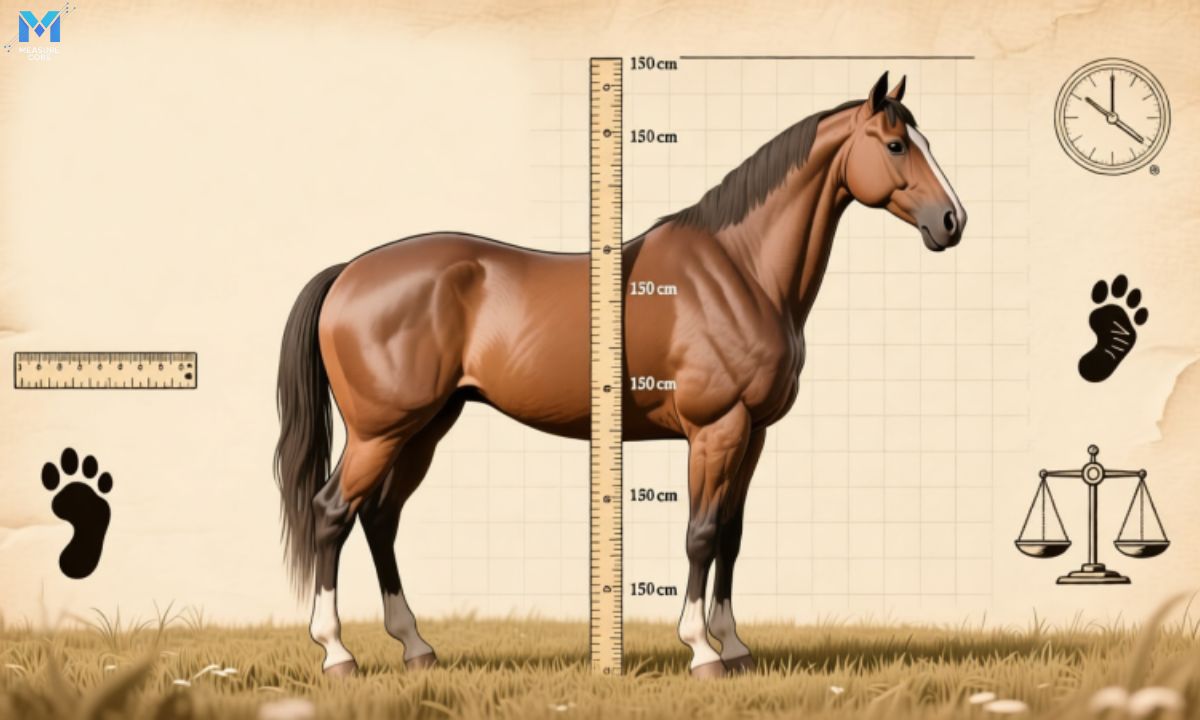
Average horse height is an important measurement used to understand a horse’s size, growth, and suitability for riding or work. It is typically measured at the withers and expressed in hands. Knowing this standard helps owners and riders make informed decisions.
This guide explains how to measure a horse’s height accurately using simple tools and correct positioning. Proper measurement ensures consistent results and allows for easy comparison across breeds. It also supports safe fitting of tack and equipment.
Understanding average horse height also helps when comparing breeds and tracking development over time. Factors such as genetics, nutrition, and age can influence final height. Accurate measurements support better care, management, and performance planning.
Average Horse Height Explained in Hands, Feet, and CM
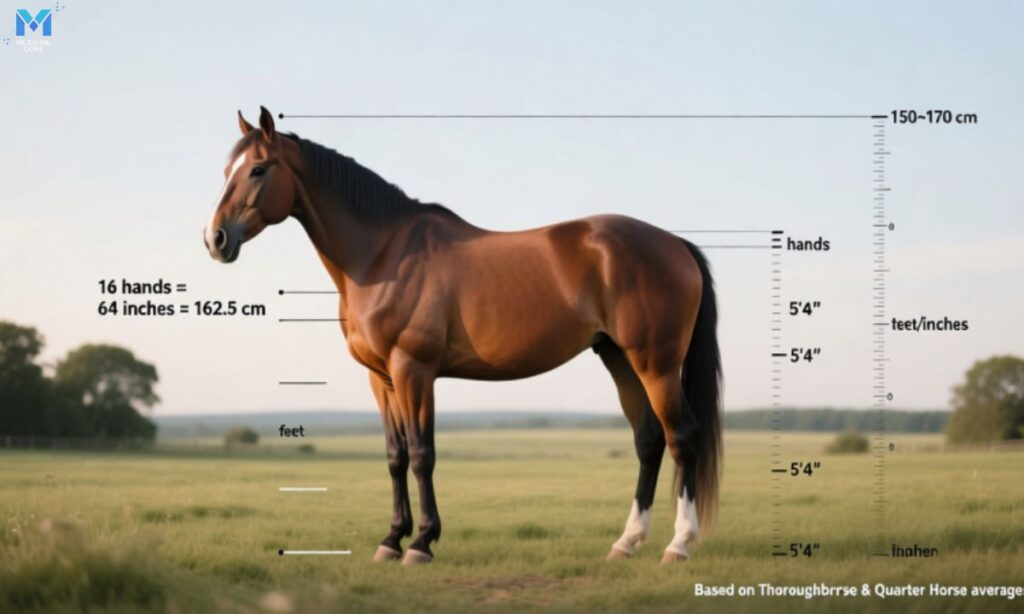
Understanding average horse height starts with knowing the measurement units used in the equestrian world. Horses are traditionally measured in “hands,” where one hand equals four inches or about 10.16 centimeters.
The average horse height typically ranges from 14 to 17 hands, which translates to roughly 56 to 68 inches or 142 to 173 centimeters.The measurement method matters because it affects how we classify horses and ponies.
Most equestrians use hands as the standard measurement, but converting to feet and centimeters helps when comparing size proportions across different regions. Knowing these height conversion numbers makes it easier to understand what “average horse height” really means for your specific needs.
Standard Horse Height Range for Adult Horses
The standard measurement for adult horses falls between 14.2 and 16.2 hands, though this average size range varies by breed and type. Light riding horses typically measure around 15 to 16 hands, while draft horses can reach 16 to 18 hands or more.
Understanding these height standards helps you choose the right horse for your riding style and physical build.
- Light breeds (Thoroughbreds, Arabians): 15 to 16 hands
- Warmblood breeds (Sport horses): 15.2 to 17 hands
- Draft breeds (Clydesdales, Percherons): 16 to 18+ hands
How Horse Breed Affects Average Height
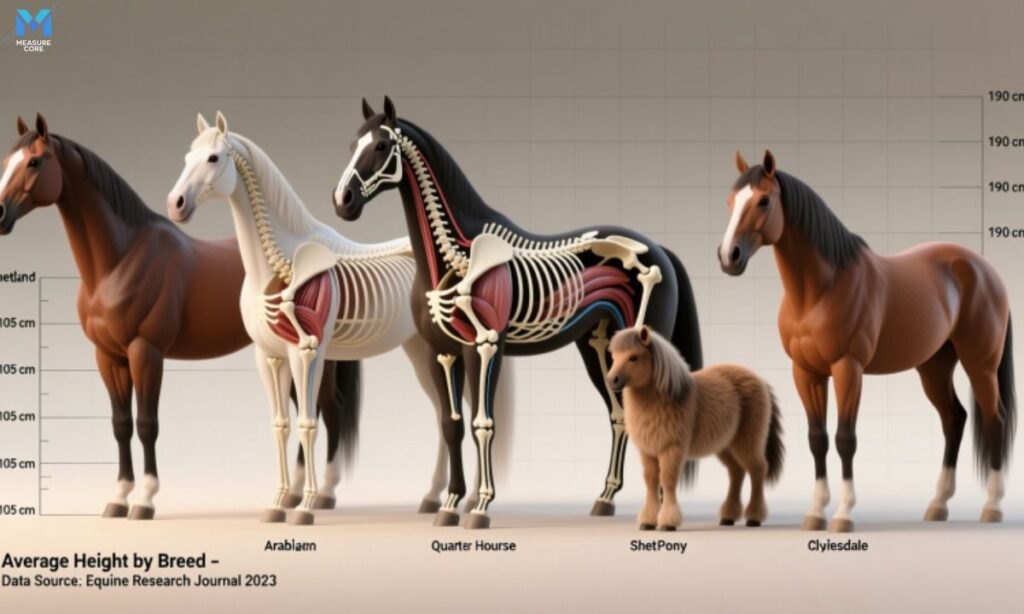
Horse breed plays a major role in determining average horse height, with size variations spanning from miniature horses under 8 hands to massive draft horses over 18 hands.
Each breed has its own height measurement method and size classification that helps maintain breed standards. These dimensional differences exist because horses were bred for specific purposes, whether for racing, farm work, or riding.
- Quarter Horses: 14 to 16 hands (versatile and compact)
- Thoroughbreds: 15.2 to 17 hands (tall and athletic)
- Arabian Horses: 14.1 to 15.1 hands (smaller but elegant)
- Belgian Draft Horses: 16 to 18 hands (powerful and massive)
Horse Height Chart by Popular Breeds
A height chart provides a clear size comparison across different horse breeds, making it easier to understand the average horse height for each type.
This measurement guide includes popular breeds with their standard measurement in hands, inches, and centimeters so you can see the dimensional scale at a glance.
| Breed | Height (Hands) | Height (Inches) | Height (CM) |
| Miniature Horse | 7 – 8.2 | 28 – 34 | 71 – 86 |
| Shetland Pony | 9 – 10.2 | 36 – 42 | 91 – 107 |
| Arabian | 14.1 – 15.1 | 57 – 61 | 145 – 155 |
| Quarter Horse | 14 – 16 | 56 – 64 | 142 – 163 |
| Thoroughbred | 15.2 – 17 | 62 – 68 | 157 – 173 |
| Andalusian | 15.1 – 16.1 | 61 – 65 | 155 – 165 |
| Warmblood | 15.2 – 17 | 62 – 68 | 157 – 173 |
| Clydesdale | 16 – 18 | 64 – 72 | 163 – 183 |
| Shire | 16 – 18+ | 64 – 72+ | 163 – 183+ |
Step-by-Step Guide to Measuring Horse Height
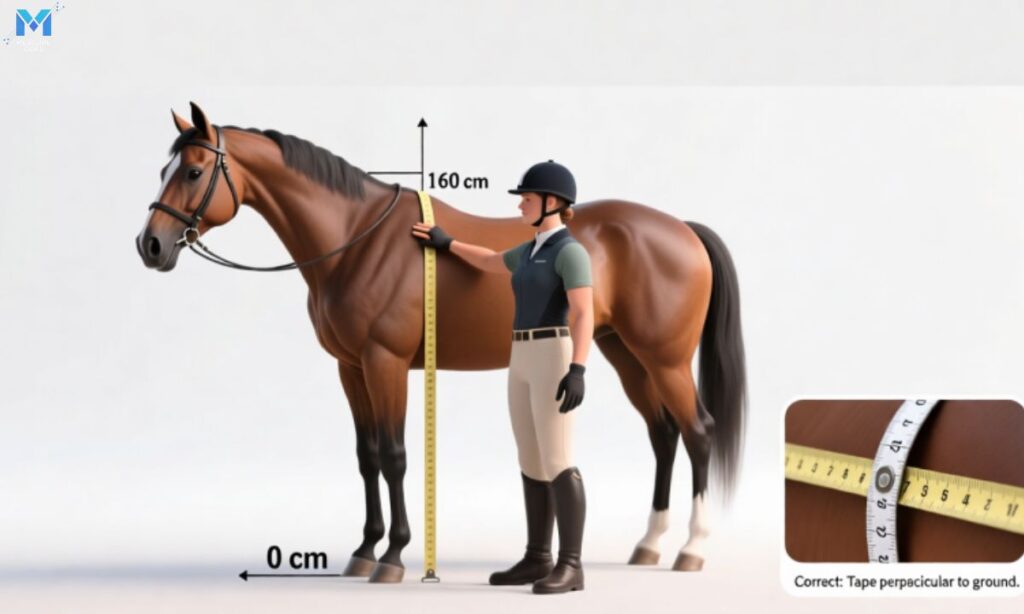
Measuring average horse height accurately requires the right measurement tools and proper technique to ensure dimensional accuracy.
Following the correct height measurement method gives you reliable dimensional data that matches standard measurement practices used by veterinarians and breed registries.
- Find level ground: Place your horse on flat, even surface to avoid measurement errors
- Position your horse square: Make sure all four legs are straight and evenly placed for accurate height assessment
- Locate the withers: Find the highest point of the shoulder blades where the neck meets the back
- Use a measuring stick: Place a proper horse measuring tool vertically from the ground to the withers for precise height estimation
- Record in hands: Convert your measurement to hands (divide inches by 4) and note it in your records
Common Mistakes When Measuring a Horse’s Height
Even experienced horse owners can make errors that affect the average horse height reading, leading to inaccurate dimensional data and improper size evaluation.
Avoiding these common measurement mistakes ensures you get reliable height standards that match official records and help with proper equipment sizing.
- Measuring on uneven ground: This throws off dimensional accuracy and gives false height indicators that don’t reflect true size
- Using the wrong measurement point: Measuring from the head or back instead of the withers creates incorrect size metrics
- Horse not standing square: When legs aren’t positioned evenly, it affects the height assessment and dimensional consistency
- Using improper measurement tools: Tape measures or rulers lack the precision needed for accurate average horse height readings
Factors That Influence a Horse’s Growth and Size
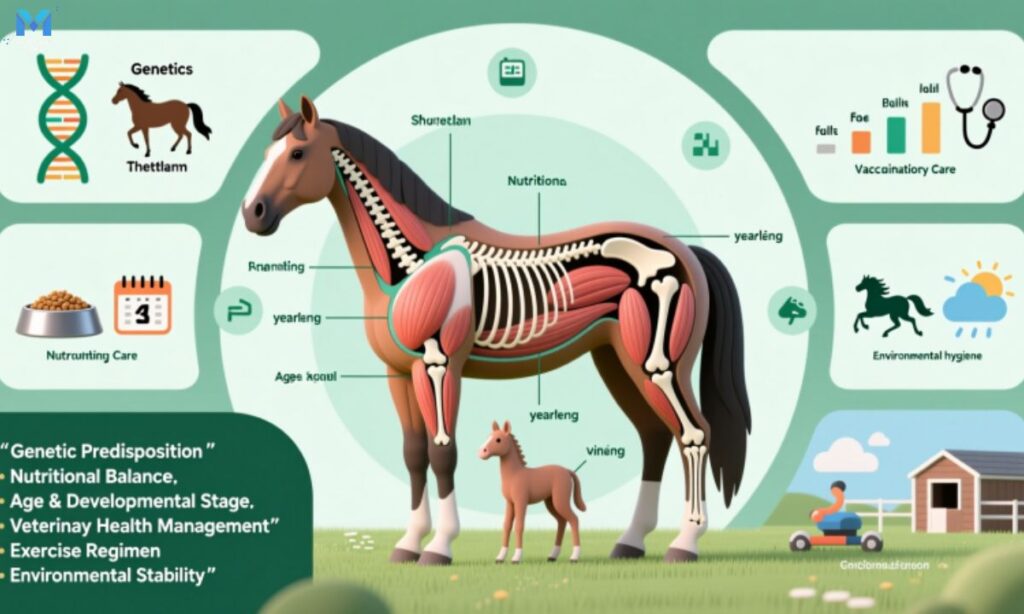
The average horse height isn’t just determined by breed several factors affect how tall a horse will grow and its final physical dimensions. Genetics play the biggest role, but nutrition, health care, and exercise during the growing years significantly impact size variations.
Young horses need proper feeding and care to reach their full height potential, which typically happens between ages 4 and 6 depending on the breed.
Environmental conditions and early life experiences also contribute to dimensional differences in mature horses. Horses that receive adequate protein, minerals, and vitamins during development tend to meet their breed’s standard size chart expectations.
Poor nutrition or health issues during critical growth periods can result in horses falling below the average size range for their breed, affecting their overall physical measurements and size proportions throughout their lifetime.
Horse Height Comparison: Horse vs Pony
Understanding the difference between horses and ponies comes down to average horse height and specific size classification standards used worldwide.
This comparative sizing helps determine whether an equine is officially considered a horse or pony, which affects competition categories and breed registration.
| Category | Height (Hands) | Height (Inches) | Height (CM) | Key Characteristics |
| Pony | Under 14.2 | Under 58 | Under 147 | Shorter legs, thicker manes, sturdy build |
| Horse | 14.2 and above | 58+ | 147+ | Longer legs, refined features, larger frame |
Final Thoughts
Understanding average horse height provides valuable insight into a horse’s size, breed characteristics, and overall development. Accurate measurement at the withers ensures consistency and reliable comparisons.
Learning the correct way to measure a horse helps owners select proper equipment and monitor growth over time. Simple tools and correct positioning make the process easy and repeatable.
By considering factors such as genetics, nutrition, and age, horse owners can better interpret height measurements. This knowledge supports informed care, effective management, and long-term equine well-being.
Frequently Asked Questions
What is the average horse height?
The average horse height ranges between 14.2 and 17 hands when measured at the withers. This equals about 58 to 68 inches, depending on breed and genetics.
How is average horse height measured?
Average horse height is measured from the ground to the highest point of the withers. The measurement is traditionally recorded in hands, with one hand equal to four inches.
Does average horse height vary by breed?
Yes, average horse height varies widely by breed. Draft horses are usually taller, while ponies and light breeds are shorter.
At what age does a horse reach its average height?
Most horses reach their full average height between 5 and 7 years of age. Growth rates depend on genetics, nutrition, and overall health.
Why is knowing the average horse height important?
Knowing the average horse height helps with proper saddle fitting, breed identification, and overall care. It also supports safe riding and effective management.

Daniel is a skilled content creator with 4 years of experience writing blogs on measurement, weights, and dimensions. Now, he brings his expertise to MeasureCore.com, delivering accurate, insightful, and user-friendly resources for global readers.