

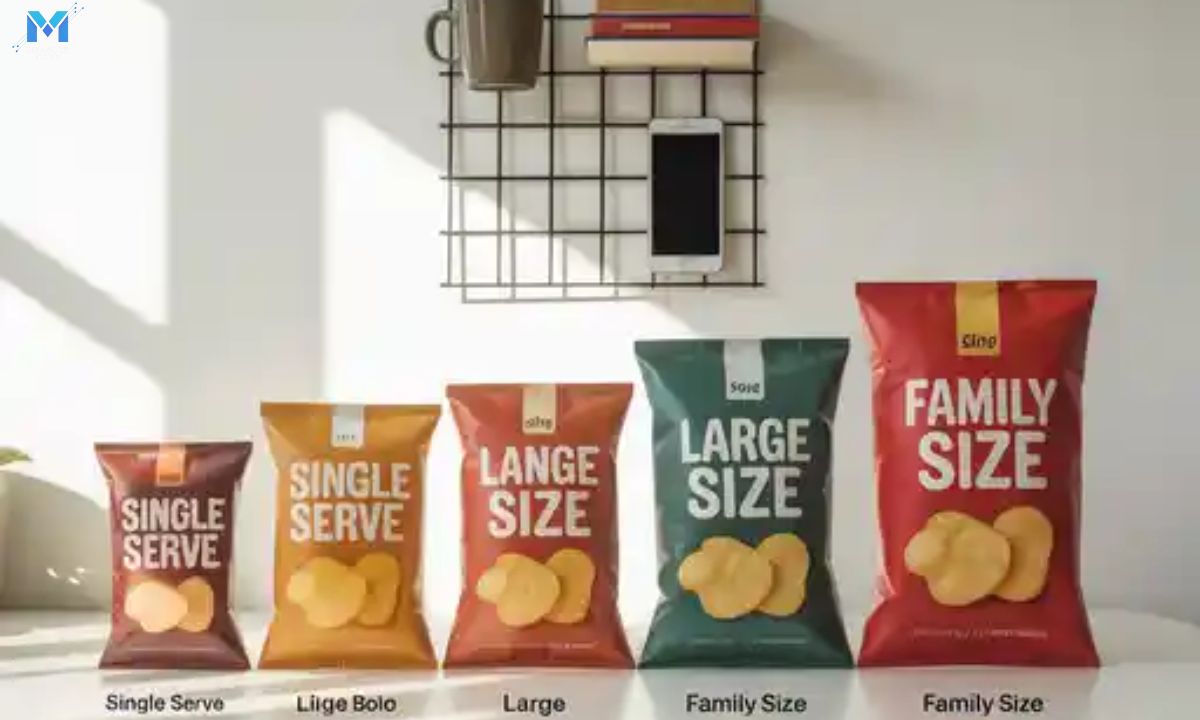
Ever stood in front of the snack shelf, wondering why chip bags come in so many sizes? From tiny single-serve packs to giant party bags, each size has a purpose and story behind it. These crinkly bags are designed with careful planning, not just random measurements.
Chip bag sizes show how marketing, design, and snacking habits come together.
How Big Are Standard Chip Bags?
A regular size chip bag typically measures about 8 inches tall and 5 inches wide. Most standard chip bag weights range from 8 to 10 ounces, which is the size you’ll find most often at convenience stores and vending machines.
The average chip bag weight can vary by brand and type of chip. Single-serve chip bags are much smaller at around 1 to 2 ounces, while family size chip bags can hold anywhere from 13 to 16 ounces or more.
The Evolution of the Chip Bag
Chip packaging design has changed dramatically since potato chips first hit the market. Early chips were sold in plain paper bags or tins, which didn’t keep them fresh for long.
Modern chip bag manufacturing introduced flexible packaging made from multiple layers of plastic and aluminum. This food packaging evolution brought us the shiny, airtight bags we see today that keep chips crispy for weeks.
The chip bag material used now includes nitrogen in chip bags to prevent crushing and maintain freshness. Sustainable chip packaging is also becoming more popular as brands work toward recyclable chip bags and eco-friendly packaging options.
The Psychology Behind Sizing
Chip bag psychology plays a huge role in how companies design their packaging. Brands know that larger bags create a perception of better value, even if the actual chip quantity doesn’t match the bag size.
The visual impact packaging creates influences what shoppers grab off the shelf. A slightly bigger bag catches your eye faster than a smaller one, making you feel like you’re getting more for your money.
Marketing behind chip sizes is carefully calculated to fit different needs and price points. Companies offer multiple sizes so customers can choose based on occasion—whether it’s a quick snack or feeding a crowd at a party.
Standard Chip Bag Sizes and Their Real-World Comparisons
Single-Serve Bags (1-2 oz)
Single-serve chip bags are the smallest option available and perfect for portion control packaging. These tiny bags are roughly the size of your hand and contain just enough chips for one person’s snack.
You’ll find these small chip bag sizes in vending machines, lunch boxes, and convenience store checkout aisles. They typically measure about 4 to 5 inches tall and 3 inches wide, making them super portable.
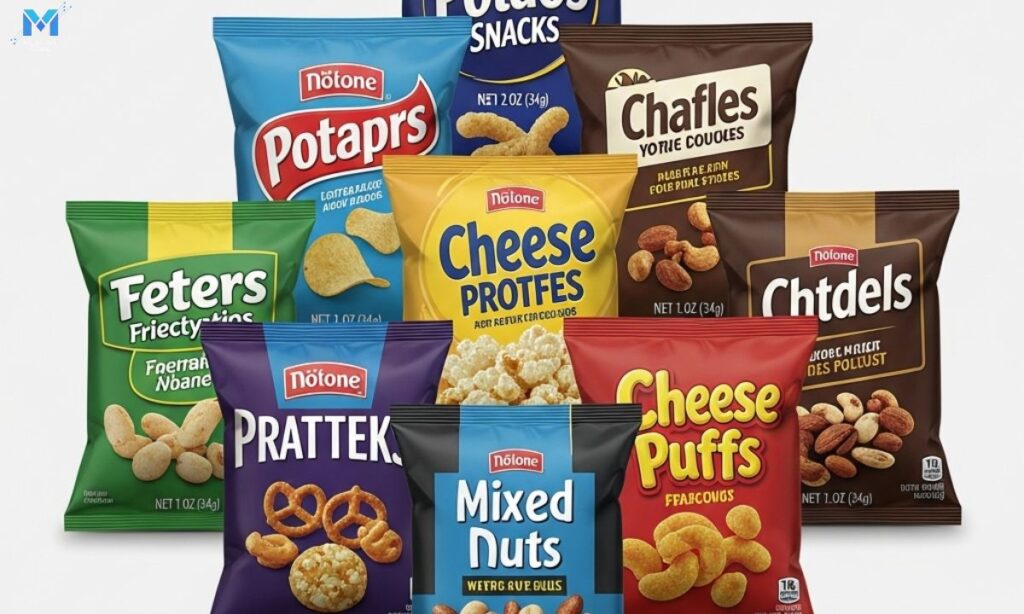
A single-serve chip bag usually contains around 150 to 160 calories, which helps with mindful snacking. The compact size makes them ideal for kids’ lunches or when you want to avoid overeating from a larger bag.
Most brands price these between $1 to $2 each, making them convenient but less economical than buying bigger bags. Despite the higher per-ounce cost, they remain popular because of their grab-and-go convenience and built-in portion control.
| Brand | Weight | Typical Price | Common Flavors |
| Lay’s | 1 oz | $1.00-$1.25 | Classic, BBQ, Sour Cream & Onion |
| Doritos | 1 oz | $1.00-$1.50 | Nacho Cheese, Cool Ranch |
| Pringles | 1.41 oz | $1.50-$2.00 | Original, Sour Cream & Onion |
| Cheetos | 1 oz | $1.00-$1.25 | Crunchy, Flamin’ Hot |
| Ruffles | 1 oz | $1.00-$1.25 | Original, Cheddar & Sour Cream |
| Fritos | 1 oz | $1.00-$1.25 | Original, Chili Cheese |
Regular Size Bags (7-8 oz)
Regular size chip bags are the most common option you’ll see in grocery stores and gas stations. These bags typically contain around 7 to 8 ounces of chips and measure approximately 8 inches in height.
The chip bag dimensions chart shows these bags are perfect for sharing between two people or enjoying over a few sittings. They’re designed to fit comfortably in your hand while still offering enough chips to satisfy your craving.
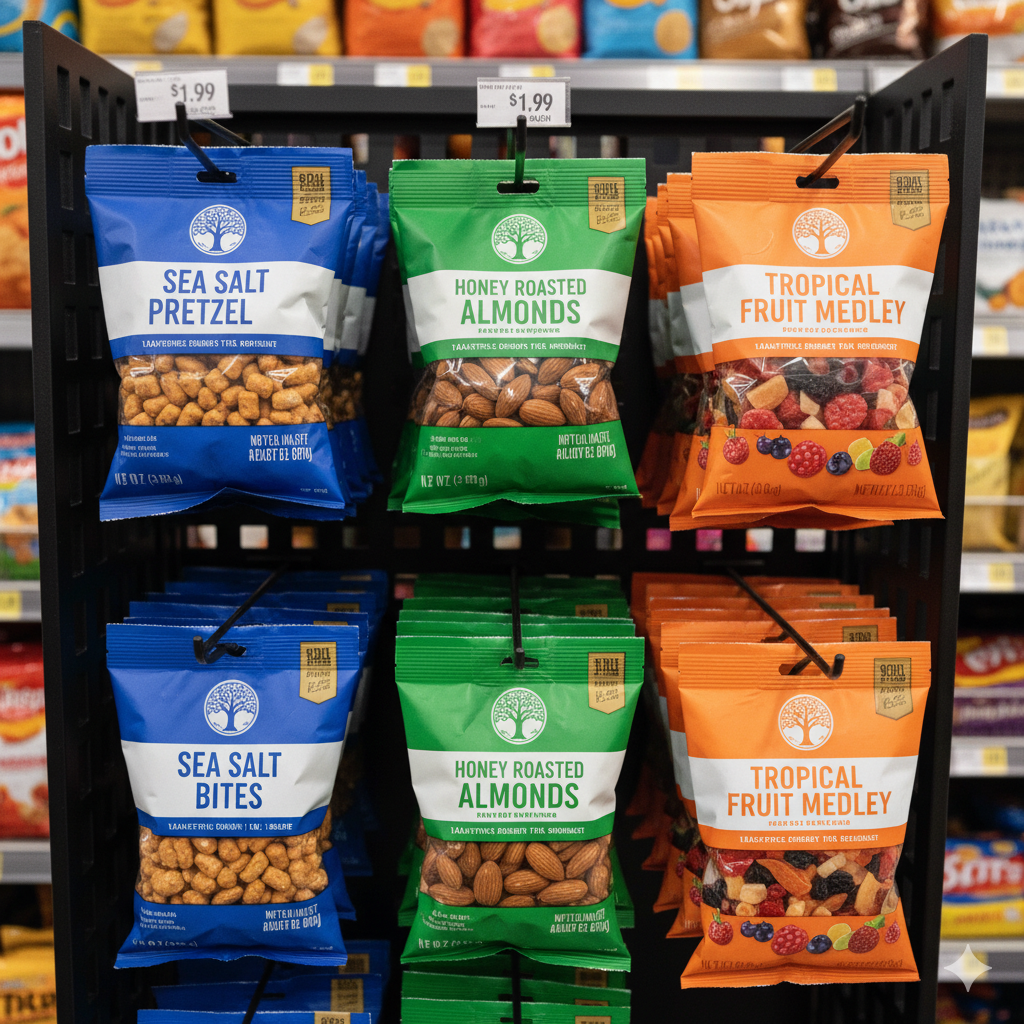
Standard chip bag dimensions for this size make them ideal for lunch boxes and casual snacking. The chip bag capacity holds roughly 10 to 12 servings according to most nutrition labels, though many people eat more in one sitting.
These bags strike a balance between portion control packaging and generous snacking. Price point packaging for regular bags usually ranges from $3 to $5, making them an affordable everyday choice.
| Brand | Weight | Approximate Dimensions | Typical Price Range |
| Lay’s Classic | 7.75 oz | 8″ × 5″ | $3.49 – $4.29 |
| Doritos | 9.25 oz | 8.5″ × 5.5″ | $3.99 – $4.79 |
| Ruffles | 8.5 oz | 8″ × 5.25″ | $3.49 – $4.49 |
| Pringles | 5.5 oz | 9.8″ × 3″ (canister) | $2.49 – $3.29 |
| Kettle Brand | 8 oz | 8.5″ × 5″ | $3.99 – $4.99 |
| Cheetos | 8.5 oz | 8.25″ × 5.5″ | $3.79 – $4.59 |
Family Size Bags (9-10 oz)
Family size chip bags are designed for sharing among three to four people. These bags typically measure around 10 to 12 inches in height and contain enough chips for a movie night or casual gathering.
The standard chip bag dimensions for family sizes make them perfect for household snacking. They’re bigger than regular bags but still fit comfortably in your pantry or on kitchen counters without taking up too much space.
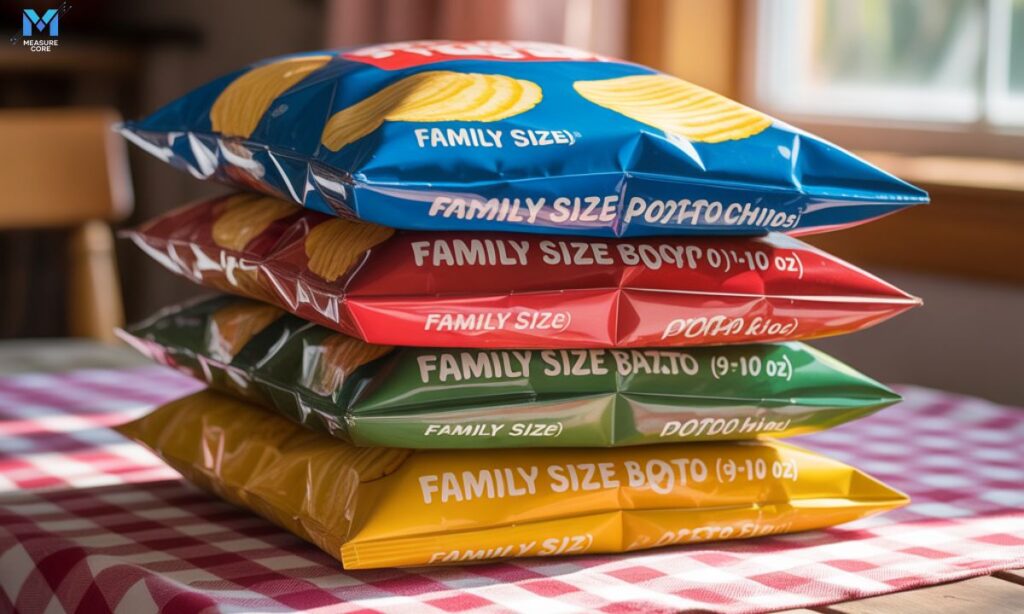
Most family size chip bag options contain about 9 to 10 servings according to the nutrition label. However, let’s be honest—most families finish these bags in one or two sittings rather than stretching them across multiple days.
When comparing chip bag capacity across brands, family sizes offer the best value per ounce. They cost less per serving than single-serve or regular bags, making them a smart choice for regular snackers.
| Brand | Weight | Dimensions (Height × Width) | Servings |
| Lay’s Classic | 10 oz | 12″ × 8″ | 10 |
| Doritos Nacho Cheese | 9.25 oz | 11.5″ × 7.5″ | 9 |
| Ruffles Original | 9 oz | 11″ × 7.75″ | 9 |
| Pringles Original | 5.5 oz | 9.8″ × 3″ (canister) | 5.5 |
| Cheetos Crunchy | 8.5 oz | 11″ × 7.5″ | 8 |
Party Size Bags (13-16 oz)
Party size chip bags are designed for sharing with groups of people. These large chip bag dimensions typically measure around 10 to 12 inches tall and 7 to 8 inches wide, making them hard to miss on store shelves.
A party size chip bag usually contains 13 to 16 ounces of chips, enough to serve 6 to 8 people. The chip bag capacity at this size makes them perfect for gatherings, movie nights, or family game days.
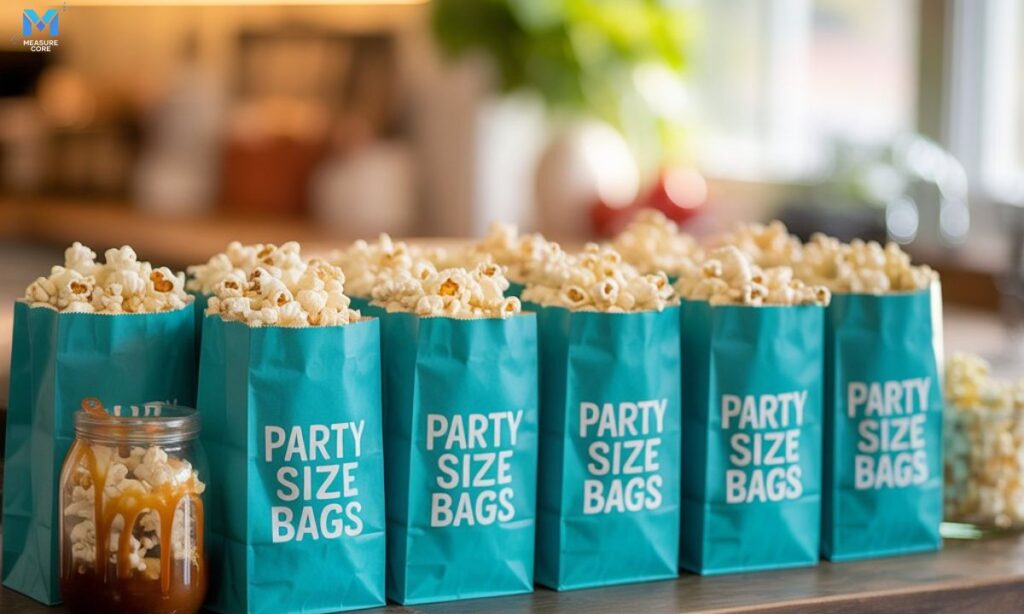
When you compare chip bag sizes, party bags offer the best value per ounce. The price point packaging strategy makes these bags appealing for anyone hosting an event or just wanting chips to last longer.
How big is a family size chip bag compared to party size? Family size bags typically hold the same amount (13-16 oz), so the terms are often used interchangeably by different brands.
| Brand | Weight | Typical Price Range |
| Lay’s Party Size | 13 oz | $4.99 – $5.99 |
| Doritos Party Size | 14.5 oz | $5.29 – $6.49 |
| Ruffles Party Size | 13 oz | $4.99 – $5.99 |
| Pringles Family Size | 5.5 oz | $3.49 – $4.29 |
| Tostitos Party Size | 14.5 oz | $5.49 – $6.29 |
| Cheetos Party Size | 15 oz | $5.29 – $6.49 |
The Science and Engineering Behind Chip Bag Dimensions
The Air Factor – It’s Not Just Empty Space
Air in chip bags isn’t there to trick you—it actually serves an important purpose in protecting your snacks.
Why chip bags have air comes down to three key reasons:
- Nitrogen in chip bags keeps chips fresh by preventing oxidation and staleness
- The air cushion protects chips from breaking during shipping and handling
- It extends shelf life by creating a sealed, oxygen-free environment
Chip packaging engineering has perfected this balance over decades. The cushion you see isn’t wasted space—it’s a protective barrier that ensures your chips arrive intact and tasty.
Material Constraints and Physical Limitations
Chip bag material needs to be both flexible and strong enough to protect delicate chips from breaking during transport.
The chip packaging engineering process considers how bags will stack on shelves and fit into shipping boxes. Manufacturers use special flexible packaging that can expand slightly but still maintain its shape and structural integrity.
Nitrogen in chip bags takes up space to cushion the chips and keep them fresh longer. This is why chip bags have air—it’s actually protective gas that prevents crushing and extends shelf life.
Standard chip bag dimensions are designed to maximize shelf space packaging while being easy for customers to hold and carry.
Manufacturing Efficiency and Standardization
Chip bag manufacturing relies on standardized measurements to keep production fast and cost-effective. Standard chip bag dimensions are designed to fit seamlessly on packaging machines that can fill thousands of bags per hour.
Chip packaging engineering also considers shelf space packaging and transportation needs. Uniform sizes mean bags stack neatly in boxes, fit efficiently on store shelves, and minimize wasted space during shipping.
Regional and Cultural Variations in Chip Bag Sizes
International Perspectives
International chip bag sizes differ significantly from country to country based on local preferences and regulations.
In Europe, standard snack packaging tends to be smaller than American portions, with many bags ranging from 25 to 50 grams.
Asian markets often feature even smaller single-serve portions, typically around 20 to 40 grams per bag.
Chip bag size comparison across countries reveals interesting patterns about eating habits and portion control. What Americans consider a single-serve chip bag might be seen as a sharing size in other parts of the world, reflecting different cultural approaches to snacking.
Cultural Influences on Packaging
International chip bag sizes differ significantly based on local eating habits and preferences. In some countries, smaller portions are standard because people snack less frequently throughout the day.
Chip packaging design also reflects cultural attitudes toward sharing and individual consumption. Asian markets often favor multi-pack small bags, while American packaging tends toward larger single bags meant for sharing.
Price point packaging varies worldwide based on economic factors and purchasing power. What’s considered a standard chip bag in one country might be labeled as a party size in another, showing how portion size in snacks is culturally relative.
The Marketing Psychology of Chip Bag Sizes
Price Point Strategy
Price point packaging determines which size bag ends up in your cart. Companies design chip bag sizes to hit specific price targets that appeal to different types of shoppers and budgets.
A single-serve chip bag at $1.50 might seem affordable for a quick snack. But when you compare the cost per ounce, the family size chip bag often offers much better value.
Brands use this pricing strategy to maximize sales across all customer segments. They know some people want convenience while others hunt for the best deal, so they package accordingly.
Visual Impact and Shelf Presence
Shelf space packaging is designed to grab attention in crowded store aisles. Chip companies use bold colors and strategically sized bags to stand out among dozens of competing snacks on the shelves.
The packaging psychology behind chip bags goes beyond just holding the product. A taller, wider bag commands more visual space and makes shoppers assume they’re getting a better deal, even before checking the actual weight.
Price point packaging helps brands target different customer segments effectively. From small chip bag sizes for quick purchases to large chip bag dimensions for gatherings, each size is positioned to maximize sales at its specific price tier.
Measuring and Comparing Chip Bag Sizes in Everyday Life
Practical Comparisons for Standard Bag Sizes
When you’re trying to visualize chip bag measurements, here are some easy comparisons:
- A single-serve chip bag is about the size of your hand or a smartphone
- A regular size chip bag is roughly as tall as a water bottle and as wide as a paperback book
- Family size chip bags compare to the length of a standard tablet or small laptop
- Party size chip bags are as big as a large dinner plate when laid flat
DIY Measurement Tips Without a Ruler
- Use your hand as a guide—most standard chip bag dimensions are roughly the length of an adult hand from wrist to fingertip
- Compare chip bag measurements against common items like a dollar bill, which is about 6 inches long
- Stack bags side by side for a quick chip bag comparison to see which offers more volume
- Check the chip bag ounces printed on the front instead of relying on visual size alone
Environmental Impact of Chip Bag Sizes
The Sustainability Question
Chip bag waste has become a growing concern as millions of bags end up in landfills every year. Most traditional potato chip packaging isn’t easily recyclable because it’s made from mixed materials that protect freshness but harm the environment.
Sustainable chip packaging is slowly gaining attention from major snack brands. Some companies are now testing recyclable chip bags and eco-friendly packaging alternatives that break down faster than conventional materials.
The push for better chip bag sustainability means rethinking how snacks are packaged entirely. Smaller portion control packaging can reduce waste, while innovations in chip bag material aim to balance product protection with environmental responsibility.
Innovations in Packaging Efficiency
Chip bag waste has become a major concern as millions of bags end up in landfills every year.
Many companies are now developing sustainable chip packaging that uses less material while still protecting the product inside.
Recyclable chip bags are being tested by several brands, though the multi-layer chip bag material makes recycling challenging.
Eco-friendly packaging innovations include compostable materials and smaller, more efficient designs that reduce overall waste without compromising freshness.
Final Words
Chip bag sizes may look simple, but they are carefully planned. Every size serves a purpose, from a quick snack to a big party treat.
These bags show how companies balance freshness, portion, and price. Even the air inside helps protect the chips.
Knowing the sizes helps you choose the right bag for your needs. It also makes you more aware of how packaging affects your buying choices.
Next time you grab a chip bag, think about its size and design. There’s more science and thought behind it than you might imagine.
Frequently Asked Questions
How big is a regular chip bag?
A regular chip bag is about 9–12 inches tall and holds around 7–8 ounces of chips.
What are the different chip bag sizes?
Chip bags come in single-serve, regular, family, and party sizes ranging from 1 to 16 ounces.
Why are chip bags half empty?
They’re filled with nitrogen gas to protect chips from breaking and keep them fresh.
How tall is a family size chip bag?
A family size chip bag is usually 12–14 inches tall and 7–8 inches wide.
What is the biggest chip bag size?
Party size chip bags are the largest, holding 13–16 ounces of chips.
How much does a single-serve chip bag weigh?
A single-serve chip bag weighs about 1 to 2 ounces.
Are chip bag sizes the same for all brands?
No, each brand designs its own sizes and shapes to fit its marketing and shelf needs.
How can I measure a chip bag at home?
You can use a ruler or compare it to common objects like a soda bottle or smartphone.
Why do chip bag sizes vary by country?
Different countries have unique packaging standards and portion preferences.
What gas is used inside chip bags?
Nitrogen gas is used to keep chips crisp and prevent them from going stale.

Daniel is a skilled content creator with 4 years of experience writing blogs on measurement, weights, and dimensions. Now, he brings his expertise to MeasureCore.com, delivering accurate, insightful, and user-friendly resources for global readers.