

Maine Coon cats are known for their large size and gentle personalities, earning them the nickname “gentle giants.” They are one of the biggest domesticated cat breeds, both in weight and length. Understanding their size is important for proper care and nutrition.
A fully grown male Maine Coon can weigh between 13 to 18 pounds, while females typically weigh 8 to 12 pounds. Some exceptional cats even exceed 20 pounds. Unlike most cats, Maine Coons continue growing until they are 3 to 5 years old.
Several factors influence their size, including genetics, diet, gender, and activity levels. Males generally grow larger than females, and proper nutrition supports healthy bone and muscle development. This guide will help you understand Maine Coon growth patterns and size expectations.
Why Maine Coons Are Called “Gentle Giants”
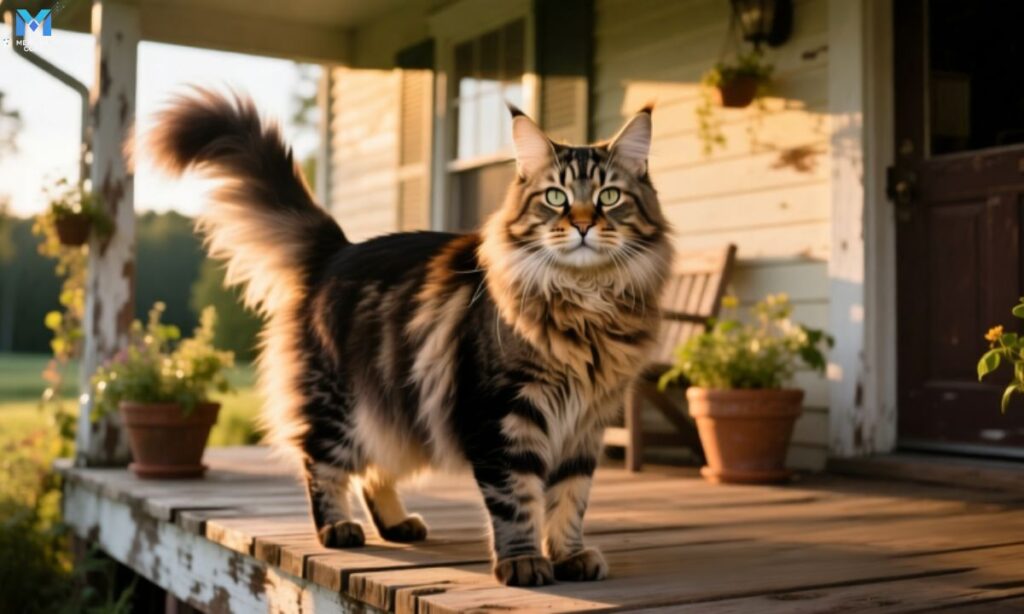
The Maine Coon cat size is truly impressive, making them one of the largest domestic cat breeds in the world. Despite their bulky object appearance and oversized dimensions, these cats are known for their sweet and calm personalities.
That’s exactly why people call them “gentle giants.”When you look at the size difference between a Maine Coon and a regular house cat, it’s like comparing a large-sized object to a small-sized object.
Their physical attributes include long bodies, thick fur, and heavy frames. But don’t let their bigger than average size fool you. Maine Coons are affectionate, playful, and great with families and other pets.
Average Maine Coon Size by Gender
The Maine Coon cat size varies significantly based on gender, and the weight comparison shows clear differences. Male Maine Coons are naturally larger than females, with a noticeable size difference in both weight and length.
When comparing male vs female Maine Coons, males typically have a bulkier build and more muscular frame. Females are still considered large-sized cats compared to other breeds, but they’re smaller than their male counterparts.
| Gender | Weight Range | Length Range |
| Male | 15–25 lbs | 40 inches |
| Female | 10–15 lbs | 40 inches |
Maine Coon Growth Timeline: From Kitten to Adult
The Maine Coon cat size doesn’t reach its full potential overnight these cats have one of the longest growth patterns among domestic breeds. While most cats stop growing at one year, Maine Coons can continue developing until they’re 3 to 5 years old.
Understanding the growth timeline helps you track your cat’s development and ensure they’re hitting healthy size metrics. Here’s a dimensional analysis of how Maine Coons grow from tiny kittens to full-sized adults:
| Age | Weight Range | Development Stage |
| 3 months | 3–6 lbs | Early kitten growth |
| 6 months | 6–10 lbs | Rapid growth phase |
| 1 year | 10–15 lbs | Continued development |
| 2 years | 12–18 lbs | Near full size |
| 3–5 years | 15–25 lbs | Fully mature adult |
Factors Affecting Maine Coon Size
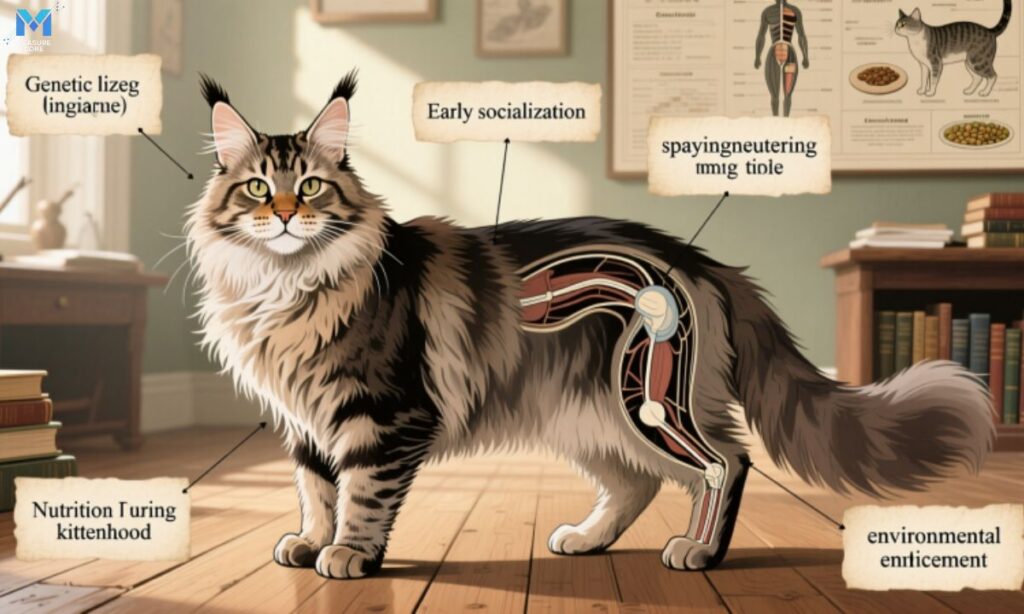
The Maine Coon cat size isn’t the same for every cat. Several factors influence how big your Maine Coon will grow. Understanding these physical attributes and environmental elements helps you support healthy development.
- 🧬 Genetics: The size of the parents directly affects the kitten’s dimensional specifications. If both parents are large-sized cats, their offspring will likely be bigger than average.
- Diet: Proper nutrition during growth patterns is crucial. High-quality protein and balanced meals support healthy weight and mass development.
- Gender: Males are naturally larger vs smaller females, with a significant size difference in weight comparison and overall build.
- Spaying/Neutering: Cats fixed before full maturity may grow slightly larger due to delayed growth plate closure, affecting their height measurement.
- Exercise: Active cats develop better muscle tone and proportional dimensions, contributing to a healthier overall size evaluation.
Diet & Nutrition Tips for Healthy Growth
Supporting optimal Maine Coon cat size requires the right nutrition from kittenhood through adulthood. A well-balanced diet ensures your cat reaches its full dimensional potential with healthy weight and mass development.
- 🍗 Protein-Rich Foods: Maine Coons need high-quality animal protein like chicken, turkey, and fish. Aim for cat food with at least 30-40% protein content to support their large-sized build.
- 🥛 Supplements: Consider omega-3 fatty acids for joint health and taurine for heart function. These support their bulky frame as they reach full proportional dimensions.
- Feeding Frequency: Kittens need 3-4 meals daily during rapid growth patterns, while adults do well with 2-3 meals. Consistent feeding schedules help maintain steady weight comparison metrics.
- Portion Control: Follow measurement guidelines based on age and weight. Overfeeding can lead to obesity, while underfeeding may stunt growth and affect their physical attributes.
- Fresh Water: Always provide clean water to support digestion and overall health, which directly impacts their size evaluation and development.
Exercise & Activity Levels for Muscle Development
Proper exercise is essential for maintaining healthy Maine Coon cat size and building strong muscle tone. Active cats develop better proportional dimensions and avoid becoming overweight, which helps them stay within the ideal weight and mass range.
- 🏃♂️ Interactive Toys: Use feather wands, laser pointers, and puzzle toys to keep your Maine Coon engaged. Regular play sessions help maintain their large-sized physique and prevent excess weight.
- 🐱 Climbing Structures: Invest in tall cat trees and shelves designed for their bulky object frame. Climbing strengthens their legs and core, supporting their oversized dimensions.
- Daily Play Sessions: Aim for 20-30 minutes of active play twice daily. Consistent activity supports healthy growth patterns and keeps their physical attributes in top shape.
- Supervised Outdoor Time: If safe, leash walks or enclosed outdoor spaces provide mental stimulation and exercise. This helps your Maine Coon maintain ideal size metrics while exploring.
Maine Coon Size Compared to Other Popular Cat Breeds

When it comes to Maine Coon cat size, these gentle giants truly stand out in the feline world. The size difference between Maine Coons and other breeds is dramatic, making them one of the most impressive domestic cats you’ll encounter.
A dimensional comparison reveals just how much bigger than average house cats Maine Coons really are. This weight comparison chart shows the relative size and scale metrics across popular breeds:
| Breed | Average Weight | Length | Key Traits |
| Maine Coon | 15–25 lbs | 40 inches | Large-sized, muscular, long body |
| Persian | 7–12 lbs | 14–18 inches | Medium-sized, compact design |
| Siamese | 8–12 lbs | 15–20 inches | Slender, elongated shape |
| Ragdoll | 10–20 lbs | 17–21 inches | Large but smaller than Maine Coon |
| British Shorthair | 9–18 lbs | 12–14 inches | Sturdy, medium to large build |
Common Myths About Maine Coon Size
There are many misconceptions floating around about Maine Coon cat size that can confuse potential owners. Let’s clear up some common myths with accurate size evaluation and dimensional facts.
- Myth #1: All Maine Coons weigh 30+ pounds : While they’re large-sized cats, most healthy Maine Coons fall within the 15-25 lb range. Cats exceeding 30 pounds are usually overweight, not naturally oversized, and this affects their proper weight comparison standards.
- Myth #2: Maine Coons are bigger than small dogs : Though impressive, the size ratio comparison isn’t quite that dramatic. They’re larger vs smaller cat breeds but typically match toy dog breeds rather than medium-sized dogs in dimensional specifications.
- Myth #3: Females grow as large as males : The size difference between genders is significant. Males consistently show bigger dimensions in both weight and mass, while females remain in the medium to large-sized object category.
- Myth #4: They reach full size in one year : Maine Coon growth patterns are much slower. These cats continue developing for 3-5 years, making their measurement timeline unique among domestic breeds.
Health Considerations for Large Cats
The impressive Maine Coon cat size comes with specific health considerations that owners should monitor carefully. Their large-sized build and bulky frame put extra stress on joints and organs, making regular veterinary check-ups essential for maintaining healthy physical attributes.
Understanding these health risks helps you provide better care and catch potential issues early. Proper weight management and size evaluation can prevent many complications associated with their oversized dimensions.
- Hip Dysplasia: Their heavy weight and mass can cause hip joint problems over time. This condition affects their mobility and is more common in cats with larger dimensional specifications, so maintaining ideal proportional dimensions is crucial.
- 💓 Hypertrophic Cardiomyopathy (HCM): This heart condition is prevalent in Maine Coons regardless of size metrics. Regular heart screenings help detect early signs, especially important given their larger body mass.
- Joint Stress: The combination of their length and width puts pressure on joints and bones. Keeping your Maine Coon within healthy weight comparison ranges reduces strain and prevents arthritis as they age.
Tips for Maintaining a Healthy Maine Coon Size
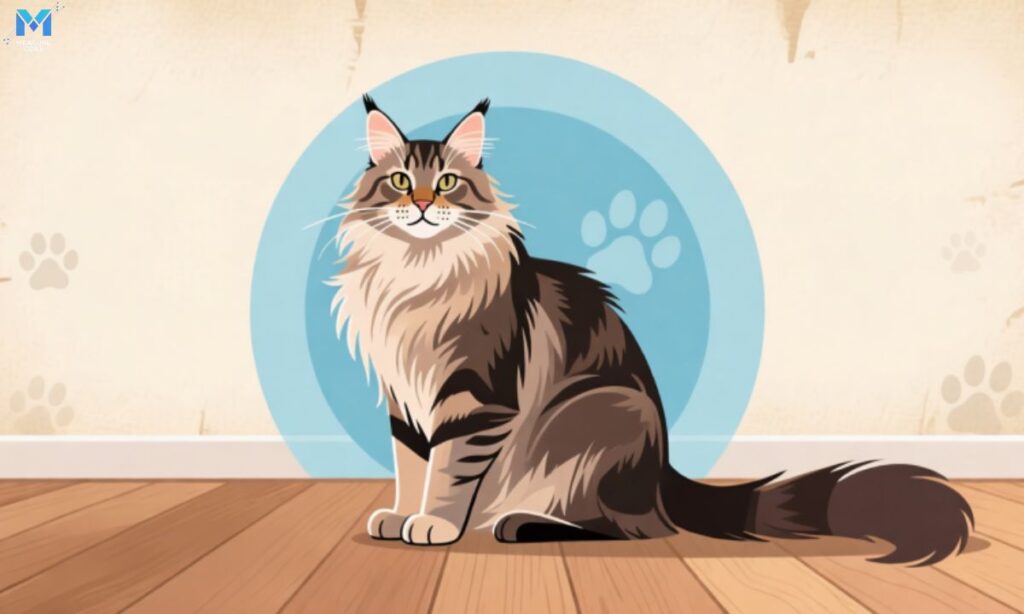
Keeping your Maine Coon cat size within the ideal range requires consistent care and attention to their unique needs. Proper maintenance ensures they stay healthy, active, and within the recommended dimensional specifications for their breed.
Regular monitoring and proactive care prevent weight-related issues and support optimal physical attributes throughout their life. Here’s how to maintain healthy size metrics:
- ✅ Balanced Diet: Feed high-quality, protein-rich food in controlled portions based on measurement guidelines. Adjust serving sizes according to their age, activity level, and current weight comparison to prevent obesity.
- 🐾 Daily Playtime: Engage in 20-30 minutes of active play twice daily. Interactive toys and games help maintain their muscular build and prevent excess weight and mass accumulation.
- ✅ Monthly Weigh-Ins: Track your cat’s weight regularly using a scale to monitor size variance. Catching small changes early helps you adjust their diet before major dimensional changes occur.
- 🐾 Agility Toys & Climbing: Provide cat trees and climbing structures designed for their large-sized frame. These encourage natural movement and support healthy proportional dimensions.
- ✅ Regular Vet Visits: Schedule check-ups every 6-12 months for professional size evaluation and health screenings. Your vet can assess if your Maine Coon’s dimensional range is appropriate for their age and build.
Final Thoughts
Maine Coon cats are remarkable for their large size and gradual growth, making them unique among domestic breeds. Males typically grow larger than females, and some can exceed 20 pounds without being overweight. Understanding their growth patterns helps owners provide proper care.
Genetics, nutrition, and activity levels play a major role in determining a Maine Coon’s final size. A balanced diet and regular exercise ensure healthy development and prevent obesity. Monitoring their growth supports long-term health and well-being.
While size is a key feature, it’s important to remember that not all Maine Coons grow to massive proportions. Regular vet checkups and attention to lifestyle factors keep these gentle giants healthy and happy. Proper care ensures they thrive throughout their extended growth period.
Frequently Asked Questions
What is the average size of a Maine Coon cat?
Male Maine Coons typically weigh 13–18 pounds, while females weigh 8–12 pounds, with some cats reaching over 20 pounds.
How long do Maine Coon cats keep growing?
Maine Coons grow gradually and usually reach full size between 3 to 5 years of age.
Do male Maine Coons grow bigger than females?
Yes, males are generally larger in both weight and physical stature compared to females.
What factors affect Maine Coon cat size?
Genetics, diet, exercise, gender, and spaying or neutering all influence a Maine Coon’s growth and final size.
How can I ensure my Maine Coon grows healthy and strong?
Provide a protein-rich diet, regular exercise, and routine vet checkups to support proper growth and overall health.

Daniel is a skilled content creator with 4 years of experience writing blogs on measurement, weights, and dimensions. Now, he brings his expertise to MeasureCore.com, delivering accurate, insightful, and user-friendly resources for global readers.